Monday, April 20, 2009

17 lakh visitors throng Taratarini Hill Shrine during month of Chaitra

Report by Orissadiary correspondent; Berhampur: On the auspicious occasion of the fourth and last Tuesday of the holy month of Chaitra at the Taratarini Hill Shrine, near Berhampur city, Orissa, more than 2 lakh devotees visited the Hill Shrine from various parts of India and abroad for a Darshan of the Twin Goddesses.
It is believed that the month of Chaitra and the four Tuesdays of this month are famous for Shakti Puja in this Breast Shrine of Mata Sati. So, every year lakhs of devotees visit this shrine on these days. It is worth mentioning that this year during the holy month of Chaitra and particularly in the four famous Tuesdays around 12 lakh and on other days around 5 lakh devotees have visited the hill shrine. This year the number of visitors to the Shrine till the last Tuesday has surpassed the records of previous years with 17 lakh visitors so far.
It is noteworthy that the famous and the holiest Taratarini Hill Shrine is one of the oldest pilgrimage sites of mother goddess and amongst the 4 major ancient Shakti centers in India. Some of the great religious texts like the Shiva Purana, the Kalika Purana, the Devi Bhagabat (a contemporary text of the Mahabharata) recognize four major Shakti peethas (centers), like Bimala, Taratarini (Orissa), Kamakshi (Assam) and Dakhina Kalika (West Bengal, Kolkata) among the 52 sacred Shakti Peethas, which originated from the limbs of the Corpse of Mata Sati in the Satya Yuga.
This famous Hill Shrine is not only famous for its Shakti worship but also it is considered as a seat of Panch Devata Upashana or the worship of five types of believe in Hindu religion like the Vaishnava, the Saiva, the Sakta, the Ganapatya and the Soura. Different from other Shakti shrines, here Shakti is not the deity of fury but the deity of love and compassion. So, here devotees believe that not by giving offerings to the deity but with pure devotion and bhakti one can get the blessings of the mother goddesses.According to the traditions the main doors of the sanctum sanatorium of the temple were thrown open at midnight on Monday. According to the needs of the visitors and for hassle free Darshan, this time the Temple administration and the ‘Tara Tarini Development Board’ made wide ranging arrangements. The chairman of the Shrine Board and the Revenue Divisional Commissioner of South Orissa, other officials of the board and officials of the district administration were present to oversee the proceedings. The fair on the last Tuesday passed of peacefully and with this, the Chaitra festival of the hill shrine came to an end.

Thursday, April 2, 2009

5 lakh devotees throng Taratarini


Berhampur: 31/March/2009
More than 5 lakh devotees thronged to the Maa Taratarini hill shrine on the auspicious occasion of the Third Tuesday of the holy Chaitra Festival and Navaratra. On 31 March there was huge crowd of devotees at the Sthana Peetha of Mata Sati, near Berhampur city, Orissa.
Maa Taratarini Hill Shrine is one of the oldest pilgrimage centers of Mother Goddess and is one amongst the four major ancient Shakti Pithas in India. The Mythological Texts recognize four major Shakti Peethas (centers) like Bimala, Tara Tarini (Orissa), Kamakshi (Assam) and Dakhina Kalika (West Bengal, Kolkata) among the 52 sacred Shakti Peethas, which originated from the limbs of the Corpse of Mata Sati in the Satya Yuga.
All arrangements were in place, thanks to the initiative of the Taratarini Development Board (TTDB). Satybrat Sahu, Chairman of TTDB & RDC Southern Division and other officials are overseeing the arrangements.
The Temple administration and TTDB made wide ranging arrangements like security, transport, Prasad, drinking water, medical services for all the devotees. And arrangement of barbers for tonsure (Mundan)on this occasion has been in place.
The fair on the Third Tuesday has passed of peacefully.
It is believed that the month of Chaitra and the four Tuesdays of this month are auspicious for Shakti Puja in this Breast Shrine of Mata Sati. So, every year lakhs of devotees visit this shrine on these days.
But this year the number of devotes visited this holy Shrine till today has surpassed all the records of earlier years. Owing to the massive development works undertaken by the 'TTDB on the lines of ‘Mata Vaishno Devi Shrine’ and good arrangements for the convenience of devotees, around 15 lakh devotes have already visited this Shrine in this auspicious month.
A massive temple is being built up by Padma Bhusan Raghunath Mahapatra and soon it will be completed, said TTDB sources. Mr.Sahu, RDC is taking interest for early completion of the complex and once it is ready, this will attract huge number of devotees.

Above Five Lakh devotes visited the Taratarini Hill Shrine

TARATARINI DEVELOPMENT BOARD
Regd. No.: GJM No. - 7177-A – 676/2002-2003
Hillpatna, Berhampur – 5, (Ganjam), Orissa
(0680) 2215168, Website: http:/taratarini.nic.in
E-Mail:
rdcbmp@ori.nic.in, hillshrine@hotmail.com
Press Release from Taratarini Hill Shrine, Berhampur, Orissa
On the auspicious occasion of the Third Tuesday of the holy Chaitra festival and Navaratra at the Taratarini Hill Shrine (the Sthana Peetha (Breast Shrine) of Mata Sati), near Berhampur city, Orissa, more than five lakh devotees thronged the Hill Shrine from various parts of India and abroad for a Darshan of the Twin Goddesses on March 31.
It is noteworthy that the famous and the holiest Taratarini Hill Shrine is one of the oldest pilgrimage sites of mother goddess and amongst the four major ancient Shakti centers in India. The Mythological Texts recognize four major Shakti Peethas (centers) like Bimala, Tara Tarini (Orissa), Kamakshi (Assam) and Dakhina Kalika (West Bengal, Kolkata) among the 52 sacred Shakti Peethas, which originated from the limbs of the Corpse of Mata Sati in the Satya Yuga.
Rooted in the hoary past, mentioned in the Puranas, the Tantras and as the main seat of Tantric cult for thousand of years and center of Shakti worship since time immemorial, this Hill Shrine is believed to be the Sthana Peetha (Breast Shrine of Mata Sati) and an important prehistoric religious center which bears an uninterrupted history of not less than 6000 years.
This great Shakti centre has also been the confluence ground of plethora of ancient religions like the Vedic religion, the Brahminical religion, the Hinduism, the Buddhism, the Tantricism etc. Unquestionably, these facts from the mythology and history demonstrate the historicity and importance of the Hill Shrine it occupied in the past. Further, the presence of the mythological pious river Rushikulya or Rushikalyani (Known as the elder sister of the Ganges in the Vedas) on the foothill of the Shrine has further enhanced the significance of the Tara Tarini Hill Shrine.
It is believed that the month of Chaitra and the four Tuesdays of this month are famous for Shakti Puja in this Breast Shrine of Mata Sati. So, every year lakhs of devotees visit this shrine on these days. But this year the number of devotes visited this holy Shrine till today has surpassed the records of earlier years. Owing to the massive development works undertaken by the 'Taratarini Development Board' in the line of ‘Mata Vaishno Devi Shrine Board’ and good arrangements for the convenience of visitors, around 15 lakh devotes have already visited this Shrine in this month.
The Temple administration and the Tara Tarini Development Board made wide ranging arrangements like security, transport, Prasad (food) for all devotes, drinking water, medical services and arrangement of barbers for mundan on this occasion. The fair on the Third Tuesday passed of peacefully for which the Board would like to thank the Orissa state administration, district administration, Media, local people and volunteers and also appreciates the cooperation of the district police.
Thanks & Regards,
R.P.Tripathy
(Member Editorial Board, Kamal Sandesh, New Delhi)
In-Charge Media & Publicity
Tara Tarini Development Board (TTDB)
Berhampur, Orissa
E-Mail: rptripathy2000@gmail.com


TARATARINI DEVELOPMENT BOARD
Regd. No.: GJM No. - 7177-A – 676/2002-2003
Hillpatna, Berhampur – 5, (Ganjam), Orissa
(0680) 2215168, Website: http:/taratarini.nic.in
E-Mail:
rdcbmp@ori.nic.in, hillshrine@hotmail.com
-------------------------------------------------------------------------------


HIGHLIGHTS OF THE 6000 YEARS OLD HISTORY OF THE TARA TARINI HILL SHRINE (KALYANI DHAM)
According to the Mythological Puranas the origin of Maa Taratarini is directly attributed to Daksha Prajapati’s Jagna in Satya Yuga. The famous Shakta Peethas of Bimala, Tara-Tarini, Dakshina Kalika, and Kamakshi originated from the limbs of the divine Corpse of Devi Sati. Mythological sacred texts like the Shiva Purana, the Kalika Purana, the Devi Bhagabat (a contemporary text of the Mahabharata written by Shri Vyasa Dev around 6000 years ago) attest this fact.
It is known from the Mahabharata that before the commencement of the Mahabharata war Lord Srikrishna had advised Arjuna to offer prayer for victory at Shridevi kupa or Bhadrakali. Bhadrakali originated from the limbs of Sati like the other four major Shakti Peethas, which existed during the time of the Mahabharata or around 6000 years ago. This is the oldest data/information we get till date, regarding the existence of the Shrines originated from the limbs of the divine Corpse of Devi Sati.
According to available historical sources the fall of Kalingan Empire and its capital Sampa (Samapa) in the Kalinga war around 2300 years ago by Mauryan Emperor Ashoka, strengthened the grip of Buddhists in this part of India. The then Sampa was hardly 7 kms away from Taratarini Hill Shrine. So, some scholars believe that Taratarini might be the principal deity (Ista-Devi) of the mighty Kalinga Empire.
According to the texts of Mahayana Buddhists, in the initial days, the Buddhists didn’t believe in the worship of Goddesses or in Pratimapuja (Idol Worship). But, the ecclesiastical texts of Mahayana’s reveal that from 1st century AD after the fall of Kalinga, for the first time the Mahayana Buddhists accepted the worship of Mother Goddess ‘Tara’. So there is seldom any doubt that the Buddhists have learned the ‘Tara’ Puja concept from this Shrine. The Bouddha Tantrik texts, texts of Vajrajani sect and Hindu Tantrik texts also attest these facts. Scholars believe that in the primary days the Buddhists worshiped Taratarini, the principal seat of Tantrik sect in Hinduism at that time, as Bouddha Tara, and later on included ‘Tara’ as the Tantrik deity or spouse of bodhisattva Avalokiteshvara in their belief system. Gradually this ‘Tara’ worship spread to different parts of the world.
Besides the worship of Tara by the Buddhist Tantrikas, the 'Maritime History' of Kalinga also suggest the worship of Tara by the Sadhavas, merchants and sea-men before launching their sea voyage from the great sea ports like Dantapura (Gopalpur), Pallur near Chilika Lake, kalingapatna and river Rushikulya . It is important to mention, that all these major Sea ports of the ancient world were present very near to the Taratarini hill Shrine.

According to folk lore and folk stories, it is around 8th Century AD when Jagadguru Sankaracharya toured the whole country, that he discovered this Shrine. But, it did not exist in its present form. After long try he came to know that this ancient Shakti centre was under the control of Buddhist tantrikas. Then he released this Peetha from the control of Bouddha tantrikas and handed it over to Hindus.
It is known from the available sources that till 17th century this place was out of the sight of the common man. But, according to a folk story once Maa Taratarini appeared as two sisters in the house of Shri Basu Praharaj. He was a learned Brahmin of Kharida Vira Jagannathpur village in Ganjam District and one of the great devotees of the Mother Goddess but child less. After staying for some years one day both the sisters disappeared suddenly from the house of Basu Praharaj and according to the account of the villagers both the sisters traveled up to the Tarini Parvat/ Ratnagiri and disappeared there.
Basu Praharaj searched these two sisters but did not find their tracings. His heart broke down with grief and pain. On that night he saw a dream where the Goddesses Tara and Tarini informed Basu Praharaj that actually they were not his daughters; but they are the Adi Shakti, Goddesses Tara and Tarini. The Goddesses ordered Basu to come out of the grief and said that the time has arrived and with full devotion renovate the temple on the Hill Top of Tarini Parvat and establish the deities according to the Vedic tradition.
After that divine direction Basu discovered the tracings of ancient most presence of Goddesses Tara -Tarini on the sacred Hill Top and immediately took steps to reconstruct the temple and the Shrine.
Since that time for its magnetism and sanctity this Sthana Peetha (Breast Shrine) of Mata Sati, became a centre of faith and reverence for countless numbers of people, out in search of peace, tranquility, guidance and spiritual energy and its fame spread like wild fire to become one of the popular religious destinations for millions of devotees.
***************************************************************************
Queries/suggestions can be sent to:
rdcbmp@ori.nic.in, rptripathy2000@gmail.com, ttdbindia@gmail.com & hillshrine@hotmail.com
For news and regular updates please visit:
http:/www.taratarini.nic.in, http://www.taratarini.blogspot.com/

Monday, March 30, 2009

Naveen visits Tara Tarini Hill Shrine


BERHAMPUR: Biju Janata Dal (BJD) President and Orissa Chief Minister, Mr.Naveen Patnaik, filed his nomination papers for the Hinjili Assembly constituency (Ganjam district) at Chatrapur on March 28. Mr. Patnaik is contesting from Hinjili seat for the third time in a row. He reached Chatrapur, the district headquarter of Ganjam district, by a helicopter to submit his nomination papers.
Before that he did not forget to offer his obeisance and special ‘Puja’ at the famous Tara Tarini Hill Shrine. Thousands of his supports and several leaders of the party accompanied Mr. Patnaik when he visited the temple of the twin Goddesses and spend around an hour on the hilltop. It is noteworthy that the famous and the holiest Tara Tarini Hill Shrine (http:/taratarini.nic.in) is one of the oldest pilgrimage sites of mother goddess and amongst the four major ancient Shakti centers in India. The Mythological Texts recognize four major Shakti peethas (centers), like Bimala, Taratarini (Orissa), Kamakshi (Assam) and Dakhina Kalika (West Bengal, Kolkata) among the 52 sacred Shakti Peethas, which originated from the limbs of the Corpse of Mata Sati in the Satya Yuga.

Wednesday, March 25, 2009

Lakhs of devotes throng the Taratarini Sthana Peetha


On the auspicious occasion of the Second Tuesday of the holy Chaitra festival at the Maa Taratarini Hill Shrine near Berhampur city, Orissa (a famous Shakti centre of South India and the Sthana Peetha (Breast Shrine) of Mata Sati), more than two lakh devotees thronged the Hill Shrine from various parts of India and abroad for a Darshan of the Twin Goddesses on March 24 2009.
It is noteworthy that the famous and the holiest Tara Tarini Hill Shrine
(www.taratarini.blogspot.com), (http:/taratarini.nic.in) is one of the oldest pilgrimage sites of mother goddess and amongst the four major ancient Shakti centers in India. The Mythological Texts recognize four major Shakti peethas (centers), like Bimala, Taratarini (Orissa), Kamakshi (Assam) and Dakhina Kalika (West Bengal, Kolkata) among the 52 sacred Shakti Peethas, which originated from the limbs of the Corpse of Mata Sati in the Satya Yuga.
Rooted in the hoary past, mentioned in the Puranas, the Tantras and as the main seat of Tantric cult for thousand of years and center of Shakti worship since time immemorial, this Hill Shrine is believed to be the Sthana Peetha (Breast Shrine of Mata Sati) and an important prehistoric religious center which bears an uninterrupted history of not less than 6000 years.
This great Shakti centre has also been the confluence ground of plethora of ancient religions like the Vedic religion, the Brahminical religion, the Hinduism, the Buddhism, the Tantricism etc. Unquestionably, these facts from the Mythology demonstrate the historicity and importance of the Hill Shrine it occupied in the past. Further, the presence of the mythological pious river Rushikulya or Rushikalyani (Known as the elder sister of the Ganges in the Vedas) on the foot hill of the Shrine has further enhanced the significance of the Tara Tarini Dham.
It is believed that the month of Chaitra and the four Tuesdays of this month are famous for Shakti Puja. So, every year lakhs of devotees visit this shrine on these days.
The Temple administration and the Tara Tarini Development Board made wide ranging arrangements like security, transport, Prasad (food) for all devotes, drinking water, medical services and arrangement of barbers for mundane on this occasion.
The fair on the second Tuesday passed of peacefully for which the Board would like to thank the Orissa state administration, district administration, devotees, local people, volunteers and also appreciates the cooperation of the police and fire department.
It is also hoped that the fair on the coming Third Tuesday of Chaitra, which generally sees the biggest congregation would pass off peacefully and the Board is geared up to ensure a peaceful and hassle free Darshan of the Goddess for the devotees.

BY: R.P.Tripathy
In-Charge Media & Publicity
Tara Tarini Development Board (TTDB)
Berhampur, Orissa

Tuesday, March 3, 2009

Taratarini Mela among India's biggest fairs

By R.P.Tripathy

The 'Taratarini Mela' one of India's biggest fairs takes place on each Tuesdays of the month of 'Chaitra' i.e. from around mid-March to mid-April at Taratarini Hill Shrine, 25-km from Berhampur City, the Southern headquarters of Orissa State (India). A grand congregation takes place on each Tuesday of the month and more than a million people visit the sacred Shrine of the Mother Goddess during this period. The interesting part of the fair is, devotees offer the first bunch of Hair of the newborns to the Goddess with a hope that the Goddess will usher prosperity, long life and protect the newborns from all evils. Though, the shrine draws huge crowd throughout the year but the month of Chaitra is considered the most auspicious. Parents in this part of India make sure that their children offer their only belonging "hair" to the Goddess and get her blessings and benediction before they embark on the journey of life. The fair is also marked by the presence of local artisans, delicacies and picnickers all around the Hill Shrine leading up to the banks of sacred river Rushikulya.

Saturday, February 14, 2009

OF THE TARA TARINI HILL SHRINE
(KALYANI DHAM), GANJAM, ORISSA

Taratarini Hill Shrine (http:/taratarini.nic.in) near the silk city Berhampur in Orissa is one of the oldest pilgrimage sites of mother goddess and amongst the four major ancient Shakti centers in India. The mythological texts recognize four major Shakti Peethas (centers), like Bimala, Taratarini, Kamakshya and Dakhina Kalika among the 52 sacred Shakti Peethas, which originated from the limbs of the Corpse of Mata Sati in the Satya Yuga.
Rooted in the hoary past, mentioned in the Puranas, the Tantras and as the main seat of Tantric cult for thousands of years and center of Shakti worship since time immemorial, this Hill Shrine is believed to be the Sthana Peetha (Breast Shrine of Mata Sati) and an important prehistoric religious center which bears an uninterrupted history of about 6000 years.
According to mythological texts and folk lore this Shrine has seen all the greatest icons of the human civilization like Lord Ram, Lord Krishna, Lord Parasuram, the Pandavas and great saints like Jagadguru Sankaracharya, Shri Chaitanya and Balayogi Neelakanthi. It has also been the confluence ground of plethora of ancient religions like the Vedic religion, the Brahminical religion, the Hinduism, the Buddhism, the Tantricism etc. Unquestionably, these facts from the mythology demonstrate the historicity and importance of the Hill Shrine it occupied in the past. Further, the presence of the mythological pious river Rushikulya or Rushikalyani (Known as the elder sister of the Ganges in the Vedas) on the foothill of the Shrine has further enhanced the significance of the Tara Tarini Shakti Dham also known as Kalyani Dham.
HIGHLIGHTS OF THE 6000 YEARS HISTORY
According to the mythological Puranas the origin of Maa Tara Tarini is directly attributed to Daksha Prajapati’s Jagna in Satya Yuga. The famous Shakta Peethas of Bimala, Tara-Tarini, Dakshina Kalika, and Kamakshi originated from the limbs of the divine Corpse of Devi Sati. Mythological sacred texts like the Shiva Purana, the Kalika Purana, the Devi Bhagabat (a contemporary text of the Mahabharata written by Shri Vyasa Dev around 6000 years ago) attested this fact.
It is known from the Mahabharata that before the commencement of the Mahabharata war Lord Srikrishna had advised Arjuna to offer prayer for victory at Shridevi kupa or Bhadrakali. Bhadrakali originated from the limbs of Mata Sati like the other four major Shakti Peethas, existed during the time of the Mahabharata or around 6000 years ago. This is the oldest data/information we get till date, regarding the existence of the Shrine of Tara Tarini.
According to available historical sources the fall of Kalingan Empire and its capital Sampa (Samapa) in the Kalinga war around 2300 years ago by Mauryan Emperor Ashoka, strengthened the grip of Buddhists in this part of India. The then Sampa was hardly 4 kms away from Taratarini Hill Shrine. So, scholars believe that Tara Tarini might be the principal deity (Ista-Devi) of the mighty Kalinga Empire.
According to the texts of Mahayana Buddhists, in the initial days, the Buddhists didn’t believe in the Matrupuja (Goddesses worship) or in Pratimapuja (Idol Worship). But, the ecclesiastical texts of Mahayana’s reveal that from 1st century AD after the fall of Kalinga, for the first time the Mahayana Buddhists accepted the worship of Mother Goddess ‘Tara’. So there is seldom any doubt that the Buddhists have learned the ‘Tara’ Puja concept from this Shrine. The Bouddha Tantrik texts, texts of Vajrajani sect and Hindu Tantrik texts also attest these facts. Scholars believe that in the primary days the Buddhists worshiped Taratarini, the principal seat of Tantrik sect in Hinduism at that time, as Bouddha Tara, and later on included ‘Tara’ as the Tantrik deity or spouse of bodhisattva Avalokiteshvara in their belief system. Gradually this ‘Tara’ worship spread to different parts of the world.
Besides the worship of Tara by the Buddhist Tantrikas, the maritime history of Kalinga also suggest the worship of ‘Tara’ by the Sadhavas (merchants) and sea-men before launching their sea voyage from the great sea ports like Dantapura (Gopalpur), Pallur near Chilika Lake, kalingapatna and river Rushikulya. It is important to mention, that all these major Seaports of the ancient world were present very near to the Taratarini Hill Shrine.
According to folklore and folk stories, it is around 8th Century AD when Jagadguru Sankaracharya toured the whole country, that he discovered this Shrine. But, it did not exist in its present form. After long try he came to know that this ancient Shakti centre was under the control of Buddhist tantrikas. Then he released this Peetha from the control of Bouddha tantrikas and handed it over to Hindus.
It is known from the available sources that till 17th century this place was out of the sight of the common man. But, according to a folk story once Maa Taratarini appeared as two sisters in the house of Shri Basu Praharaj. He was a learned Brahmin of Kharida Vira Jagannathpur village in Ganjam District and one of the great devotees of the Mother Goddess but child less. After staying for some years one day both the sisters disappeared suddenly from the house of Basu Praharaj and according to the account of the villagers both the sisters traveled up to the Tarini Parvat/ Ratnagiri and disappeared there. Basu Praharaj searched these two sisters but did not find their tracings. His heart broke down with grief and pain. On that night he saw a dream where the Goddesses Tara Tarini informed Basu Praharaj that actually they were not his daughters; but they are the Goddesses Tara and Tarini. The Goddesses ordered Basu to come out of the grief and said that the time has arrived and with full devotion renovate the temple on the Hill Top of Tarini Parvat and establish the deities according to the tradition.
After that divine direction Basu discovered the tracings of ancient most presence of Goddesses Tara-Tarini on the sacred Hill Top and immediately took steps to reconstruct the temple and the Shrine. Since that time for its magnetism and sanctity this Shakti Peetha became a centre of faith and reverence for countless numbers of people, out in search of peace, tranquility, guidance and spiritual energy and its fame spread like wild fire to become one of the popular religious destinations for millions of devotees.
RPTRIPATHY
Research Scholar,
Delhi University

Wednesday, February 11, 2009

Hill shrine steps to be widened

Tara Tarini hill shrine steps to be widened

The ropeway to the hilltop is ready to be operational

The Hindu, Apr 11, 2007, BERHAMPUR: The steps leading to the Maa Tara Tarini Hill Shrine in Ganjam district would be widened. Centuries old 999 holy steep steps connect the foothill to the top at this hill shrine.

Rest sheds

The Tara Tarini Development Board (TTDB) has decided to take up the work to widen these old 999 holy steps to meet the rush of devotees during festivals. Rest sheds would also be constructed by the side of the steps at regular intervals for benefit of tired climbers, informed secretary of TTDB, Pramod Panda.

During 'Tuesdays' of the holy month of Chaitra around six lakh devotees visited this hill shrine. Although the TTDB had provided special vehicles to carry devotees to the top of the hill, around 90 per cent of the devotees preferred to take the hard climb by the steps. The ropeway connecting the hilltop to the foothill is ready to be operational for the visitors. On Sunday the former Ganjam collector, Sanjay Singh and chief engineer of the Berhampur Development Authority (BDA), G.C.Mangual took a test ride on this ropeway.

But the TTDB feels most of the devotees would continue to take up the hard climb even after the ropeway becomes operational as for them it is a penance in honour of the deity. Meanwhile the State Endowment Department has permitted the dismantling of the `Garbhagruha' of old temple in a phased manner to enable the completion of new temple being constructed at the shrine.

The State Tourism Department has also sanctioned Rs. 45 lakhs to be spent in three years for development of the Shrine.

Wednesday, October 22, 2008

HIGHLIGHTS OF THE 6000 YEARS OLD HISTORY OF THE TARA TARINI HILL SHRINE (KALYANI DHAM)

By
R.P.Tripathy
Media & Publicity in charge,
Tara Tarini Development Board (TTDB)
New Delhi


Taratarini Hill Shrine (http:/taratarini.nic.in) near the silk city Berhampur in Orissa is one of the oldest pilgrimage sites of mother goddess and amongst the four major ancient Shakti centers in India. The Mythological Texts recognize four major Shakti peethas (centers), like Bimala, Taratarini, Kamakshya and Dakhina Kalika among the 52 sacred Shakti Peethas, which originated from the limbs of the Corpse of Mata Sati in the Satya Yuga.

Rooted in the hoary past, mentioned in the Puranas, the Tantras and as the main seat of Tantric cult for thousands of years and center of Shakti worship since time immemorial, this Hill Shrine is believed to be the Sthana Peetha (Breast Shrine of Mata Sati) and an important prehistoric religious center which bears an uninterrupted history of not less than 6000 years.

According to mythological texts and folk lore this Shrine has seen all the greatest icons of the human civilization like Lord Ram, Lord Krishna, Lord Parasuram, the Pandavas and great saints like Jagadguru Sankaracharya, Shri Chaitanya and Balayogi Neelakanthi. It has also been the confluence ground of plethora of ancient religions like the Vedic religion, the Brahminical religion, the Hinduism, the Buddhism, the Tantricism etc. Unquestionably, these facts from the Mythology demonstrate the historicity and importance of the Hill Shrine it occupied in the past. Further, the presence of the mythological pious river Rushikulya or Rushikalyani (Known as the elder sister of the Ganges in the Vedas) on the foot hill of the Shrine has further enhanced the significance of the Tara Tarini Dham also known as Kalyani Dham.

According to the Mythological Puranas the origin of Maa Taratarini is directly attributed to Daksha Prajapati’s Jagna in Satya Yuga. The famous Shakta Peethas of Bimala, Tara-Tarini, Dakshina Kalika, and Kamakshi originated from the limbs of the divine Corpse of Devi Sati. Mythological sacred texts like the Shiva Purana, the Kalika Purana, the Devi Bhagabat (a contemporary text of the Mahabharata written by Shri Vyasa Dev around 6000 years ago) attest this fact.

It is known from the Mahabharata that before the commencement of the Mahabharata war Lord Srikrishna had advised Arjuna to offer prayer for victory at Shridevi kupa or Bhadrakali. Bhadrakali originated from the limbs of Sati like the other four major Shakti Peethas, which existed during the time of the Mahabharata or around 6000 years ago. This is the oldest data/information we get till date, regarding the existence of the Shrine of TaraTarini.

According to available historical sources the fall of Kalingan Empire and its capital Sampa (Samapa) in the Kalinga war around 2300 years ago by Mauryan Emperor Ashoka, strengthened the grip of Buddhists in this part of India. The then Sampa was hardly 4 kms away from Taratarini Hill Shrine. So, some scholars believe that Taratarini might be the principal deity (Ista-Devi) of the mighty Kalinga Empire.

According to the texts of Mahayana Buddhists, in the initial days, the Buddhists didn’t believe in the worship of Goddesses or in Pratimapuja (Idol Worship). But, the ecclesiastical texts of Mahayana’s reveal that from 1st century AD after the fall of Kalinga, for the first time the Mahayana Buddhists accepted the worship of Mother Goddess ‘Tara’. So there is seldom any doubt that the Buddhists have learned the ‘Tara’ Puja concept from this Shrine. The Bouddha Tantrik texts, texts of Vajrajani sect and Hindu Tantrik texts also attest these facts. Scholars believe that in the primary days the Buddhists worshiped Taratarini, the principal seat of Tantrik sect in Hinduism at that time, as Bouddha Tara, and later on included ‘Tara’ as the Tantrik deity or spouse of bodhisattva Avalokiteshvara in their belief system. Gradually this ‘Tara’ worship spread to different parts of the world.

Besides the worship of Tara by the Buddhist Tantrikas, the maritime history of Kalinga also suggest the worship of ‘Tara’ by the Sadhavas, merchants and sea-men before launching their sea voyage from the great sea ports like Dantapura (Gopalpur), Pallur near Chilika Lake, kalingapatna and river Rushikulya . It is important to mention, that all these major Seaports of the ancient world were present very near to the Taratarini Hill Shrine.

According to folklore and folk stories, it is around 8th Century AD when Jagadguru Sankaracharya toured the whole country, that he discovered this Shrine. But, it did not exist in its present form. After long try he came to know that this ancient Shakti centre was under the control of Buddhist tantrikas. Then he released this Peetha from the control of Bouddha tantrikas and handed it over to Hindus.

It is known from the available sources that till 17th century this place was out of the sight of the common man. But, according to a folk story once Maa Taratarini appeared as two sisters in the house of Shri Basu Praharaj. He was a learned Brahmin of Kharida Vira Jagannathpur village in Ganjam District and one of the great devotees of the Mother Goddess but child less. After staying for some years one day both the sisters disappeared suddenly from the house of Basu Praharaj and according to the account of the villagers both the sisters traveled up to the Tarini Parvat/ Ratnagiri and disappeared there. Basu Praharaj searched these two sisters but did not find their tracings. His heart broke down with grief and pain. On that night he saw a dream where the Goddesses Tara and Tarini informed Basu Praharaj that actually they were not his daughters; but they are the Goddesses Tara and Tarini. The Goddesses ordered Basu to come out of the grief and said that the time has arrived and with full devotion renovate the temple on the Hill Top of Tarini Parvat and establish the deities according to the tradition.

After that divine direction Basu discovered the tracings of ancient most presence of Goddesses Tara-Tarini on the sacred Hill Top and immediately took steps to reconstruct the temple and the Shrine. Since that time for its magnetism and sanctity this Shakti Peetha became a centre of faith and reverence for countless numbers of people, out in search of peace, tranquility, guidance and spiritual energy and its fame spread like wild fire to become one of the popular religious destinations for millions of devotees.

Tuesday, October 14, 2008

Visitors' Opinion

Content writer
Travelogue - Taratarini, Toptopani, Daringbari & Dhoboleshwar, Orissa By Mr. Debashis Bose, Contributing Traveller
10-1-2007 to 16-1-2007
This time we were 7 heads. We left Howrah by Gurudev Express at 11.25 pm and our destination was Brahmapur.
11-1-07 : We arrived at Brahmapur at 10.10am, and then reached the bus stand by auto in 10 minutes. Our bus for Taratarini started at 11.05 am and reached at 12.20pm, covering 30 kms. We had lunch at a roadside hotel and then went to Panthashala of OTDC by a trekker. It is a small, calm and quite place. The Panthashala is at the top of a small hillock - a nice location, clean and tidy. While at the top of the hill, we could see valleys and ranges of hills around us.
Inside the temple compound of the Taratarini Temple
Gradually the sun went down. We went to the temple of Tara & Tarini. The old temple is smaller while the new one is under construction - located just around the old one. There were a lot of craftsmen giving shape to stone boulders. This may take another two and a half years to be completed. Though there will be a vehicular road, there will also be 999 steps. Around the temple, there are lots of big trees and its serenity can be felt. Going down, we reached Rishikulya river. Here we met two local young men who informed us that a lot of pilgrims arrive at the temple on all Tuesdays of the month of Choitro (15th March to 15th April) every year, to worship the goddess. The other bank of the river is known as Purushottampur.
12-1-07 : We hired a Tata Sumo and left at 07.22am to Purushottampur to visit the temple of Tumbeshwar Shiva and Dokshinakali Devi.
Temple of Lord Shiva near hot spring at Toptopani

Our next target was Toptopani. Though there is a direct road, we went via
Gopalpur since some of our teammates had never been to Gopalpur.
Temple of Dakshinakali at Prushottompur

Gopalpur - on-sea, as it was known earlier, is a very small place with a few hotels and shops on the sea beach and around. We went for a stroll along the beach, had tea and visited a few shops of local handicrafts. We also indulged in some shopping. Next, we reached Toptopani at 12.25pm. Here again, we stayed at Panthashala of OTDC. There are a few double storied buildings that offer double bed room accommodations with attached bath, and a two room suite & office in a separate building. There is an eatery in a separate building as well. Toptopani is a calm and quite village with big trees, almost within a jungle. We had our lunch at the eatery.

In the evening, we went for a walk and visited a hot spring from which Toptopani has derived its name. As expected, the water of the hotspring was smelling of sulphur. There are two separate bathing places near the hot spring, for gents & ladies. The hot water has been taken by pipelines to a few taps on the roadside and to the panthashala. Bathing in this hot water makes one feel fresh and energetic. it has been said that this water is good for health. We had our dinner at the same place.

13-1-07 : After our morning's daily routine and breakfast, we left at 10.30am by Tata Sumo and reached Horbhongi Dam, 30 km away, at 11.45am. Here we spent 45 minutes, going around the dam & the inspection bunglow.
Dam at Horbhongi

Our next destination was Daringbari, 240 km away and reached at 02.30 pm, at a height of 4000 ft. This place is also known as the Kashmir of Orissa, and it is said that in the past, there was snowfall here. We had our accommodation booked at the Panthaniwas of OTDC.
Another view of the dam

The Panthaniwas was not very clean and the caretaker was not in a normal state. Anyhow, the rooms were cleaned and we occupied our respective rooms. This is like a small town and the temperatures are low here. Next day was Mokor songkranti, a festival day and hence, the shops and markets remained closed. We decided to purchase some ingredients to prepare our food for the next day. Here, it may be stated that, OTDC has two types of accommodation for tourists - Panthashala & Panthaniwas, the former has arrangements for cooked food, while the latter does not provide food. There are a few utensils available and food may be prepared with the help of the caretaker. We had our dinner at a roadside hotel.
Source: www.contentwriter.in

New Taratarini Temple fast heading for completion

New Taratarini Temple fast heading for completion

As Chief Minister Naveen Patnaik is keen on completion of south Orissa's oldest shrine, Taratarini Temple, money is pouring in to the kitty of the Taratarini Development Board (TTDB). People of Ganjam district are making huge contributions, and the largest chunk of money amounting to Rs 16 lakh has been received from Hinjili, the Chief Minister's constituency, and Rs 8 lakh has come from Purusottampur block.

Till date, a total of Rs 1.35 crore has already been spent on construction of the temple. Chief Secretary Ajit Kumar Tripathy was visibly happy at the fast pace of completion while reviewing the progress of the construction on Friday in the temple premises. The construction of sandstone-built Rekha-style temple with an elevation of about 55 ft above the hilltop has made good progress, thanks to the initiative of Revenue Divisional Commissioner (RDC) and chairman of the TTDB Satyabrat Sahu. This most modern temple is being built in accordance with the ancient Orissan temple architecture replacing the old shrine.

The TTDB has entrusted noted sculptor Padma Bhusan Raghunath Mohapatra with the construction of the temple in the ancient architectural form. The Jagannath Temple of Puri and Lingaraj Temple of Bhubaneswar are examples of this traditional temple architecture of Orissa.

Though the construction of the temple started in 2003, it picked up after Sahu took over as the RDC and chief of the TTDB. More than 40 sculptors and artisans, led by Mohapatra, are engaged in the construction work. The walls and other portions of the temple bear intricate carving on stone. The temple is made in such a fashion that it can be viewed from all sides around.

The construction of a Mukteswar-style Arch Gate in front of the temple has added lustre to the temple. Once the main temple construction is completed, the entire area will be developed along with better facilities for the visiting devotees, said Sahu.
Source: The Pioneer, April 12, 2008

People donate generously to build new Taratarini temple

Berhampur: The tremendous support from the people of Ganjam to erect a new temple of Maa Taratarini has left the officials dumbfounded. The temple of Taratarini, the twin Goddesses, is situated on the top of a blue-capped hill of Purusottampur, 32 km from Berhampur. Only one of the 22 blocks of the district has contributed Rs 8.5 lakh for the purpose.

Revenue Divisional Commissioner Satyabrat Sahu, who is also the Chairman of the Tara Tarini Development Board (TTDB), is happy over the unstinted public support in Purusottampur block. The TTDB is busy in construction of a sandstone-built Rekha-style temple in place of the present one with an elevation of about 65 feet above the hilltop with an investment of Rs 2.8 crore. A sum of Rs 1.28 crore has already been spent.

The deadline for completion of the huge project is set as March 31, 2008. The chariot carrying the model of the proposed temple is moving across Ganjam district. A sealed Hundi has been placed on the chariot for collection of donations from devotees.

Officials feel that the level of support available from one block clearly indicates that there will be no problem for funds for the temple. The chariot will cover the remaining 21 blocks and the city of Berhampur town, and officials expect to get a collection of at least Rs 50 lakh. Chief Minister Naveen Patnaik, who has already contributed to the temple fund, has expressed happiness over the people's support for the project.

Earlier the TTDB had decided to rope in captains of industries and corporate sector for their assistance for the project, but little support came form them. So, a conscious decision was taken to involve people in setting up the temple, which has paid dividends, said TTDB secretary Pramod Kumar Panda.

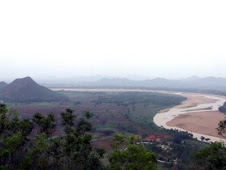
The temple is being erected amidst natural surroundings rich in vegetation. The beauty of the place is enhanced by the encircling river Rushikulya. The shrine draws huge crowds throughout the year, especially every Tuesday in the month of Chaitra. Earlier, the devotees had to scale 999 steps to go to the hilltop. Now, with the ropeway in place, it has been much easier for the people to go up. However, any body can also go to the hilltop by a vehicle.
Source: The Pioneer, Wednesday, November 21, 2007

Friday, September 26, 2008

IL&FS moves to develop Tara Tarini hill shrine

IL&FS moves to develop Tara Tarini hill shrine

The Infrastructure Leasing and Financial Services Limited (IL&FS) is eyeing the Tara Tarini hill shrine in Ganjam district of the State as its future project for long-term infrastructural development. The Mumbai based, IL&FS which is one of India’s leading infrastructure development and finance companies has recently taken up a project of infrastructure development and environment management at the centuries old Sabarimala Temple in Kerala through its subsidiary Ecosmart India Ltd.

Chetan Javeri, the Project Director of this project of IL&FS made a visit to the Tara Tarini hill shrine on Thursday to make a ground level study of the hill shrine. He also held discussions with the Revenue Divisional Commissioner (RDC), southern division, Satyabrata Sahu, who also happens to be the chairman of the Tara Tarini Development Board (TTDB) regarding a long term project for the hill shrine keeping in view its popularity by 2020. S.Mitra, a sociologist from Chicago University attached with Ecosmart also accompanied Mr. Javeri.
TTDB had a special meeting of its members with the IL&FS team on Thursday evening at the hill shrine. According to Publicity In-charge of the TTDB, Ramprasad Tripathy, Mr. Javeri would also meet the chief secretary of Orissa to discuss about the probability of their project at Tara Tarini hill shrine.
Source: The Hindu

A ropeway up to the gods

A ropeway up to the gods

Tara Tarini hill shrine in Ganjam district is prepares a simpler way to the top
The first ropeway to a hilltop in Orissa is operational at Tara Tarini hill shrine in Ganjam district.
It is part of the efforts of the Tara Tarini Development Board (TTDB) to turn this famous hill shrine of south Orissa into a major tourist destination of India.
The carriages of this ropeway would carry devotees from the ground to the 282-metre high hilltop. It would provide a recreational journey to the devotees to the hill shrine who otherwise had to climb 999 steps to the hilltop.
Source: The Hindu

Shrine on fast completion mode

Shrine on fast completion mode
As the Chief Minister Naveen Patnaik showing keen interest for the completion of the oldest shrine of the South Orissa, The Taratarini Temple, money is pouring in to the kitty of Taratarini Development Board (TTDB).
People of Ganjam district is contributing hugely and the largest chunk of money amounting Rs.16 lakh have been received only from Hinjili and Rs.8 lakh from Purusottampur block. Till date Rs.1.35 crore has already been spent for erection of the temple.
So Ajit Kumar Tripathy, the Chief Secretary was visibly happy at the fast pace of completion, while he reviewed the progress on 11 April inside the temple premises.
Construction of Sandstone built Rekha Style temple with an elevation of about 55 ft. above the hilltop has made good progress, thanks to the initiative of Satyabrat Sahu.
Mr.Sahu is the Revenue Divisional Commissioner (RDC) and the Chairman of the Taratarini Development Board (TTDB).
The most modern temple is being built in accordance to ancient Orissan temple architecture replacing the old temple.
The TTDB has entrusted noted sculptor, Padma Bhusan Raghunath Mohapatra to construct this modern temple in ancient architectural form.
The Sri Jagannath temple of Puri and Sri Lingaraj temple of Bhubaneswar are examples of this traditional temple architecture of Orissa.
Though the construction of the temple started in 2003, it picked up after Mr.Sahu took over as RDC and Chief of TTDB.
More tha 40 sculptors and artisans led by Mr. Mohapatra are involved in the construction of this temple.
The walls and other portions of the temple bear intricate carving on the stone. The temple is made in such a fashion that itcan be viewed from all places around.
Construction of a Mukteswar style Arch Gate in front of the temple has added luster to the temple. Once the main temple construction is completed than the entire area will be developed along with better facilities for the visiting devotees.

Donation pouring in for temple

Donation pouring in for temple
He may be a poor farmer but his heart is larger than any of the top honchos of the corporate world. Till the other day, Bhagaban Patnaik was a nondescript farmer of Rangeilunda block of Ganjam district. But when he donated Rs.1.11 lakh from his own funds for construction of the Grand Temple of Goddess Tara Tarini, eye brows were raised and entire administration was taken aback. The Goddesses TaraTarini have been regarded as the presiding deity(Ista-Devi)in almost every house in South Orissa. The Tara Tarini Development Board (TTDB) is taking up the construction of massive Sandstone built Rekha Style temple, unique to Orissa. The Shri Jagannath temple of Puri and Shri Lingaraj temple of Bhubaneswar are examples of this traditional temple architecture of Orissa. The temple is being built on the hilltop approximately 708 feet at a distance of 30 km towards north of Berhampur on the south bank of river Rushikulya at a cost of Rs.2 crore, for which TTDB is collecting donations from general public. Due to paucity of funds TTDB approached the corporate sectors including Tata Steel, Vedanta Alumina, NALCO and NINL. While NALCO and NINL responded, Tata Steel did not bothered to even reply. Taking cue form the common pilgrims, the TTDB started donation campaign to fund the project. And response of the common people is tremendous, said Satyabrat Sahu, Chairman of TTDB. Mr.Sahu is the Revenue Divisional Commissioner of the Southern Division. After Mr.Sahu took over as the RDC, he is taking a lot of interest in erecting the temple as soon as possible, said Pramod Kumar Panda, Secretary of the TTDB. The TTDB decision to run the Tara Tarini Rath for collection of funds has yielded results, said Mr.Panda. While the poor farmer donated such a huge amount, biggest single contribution came from Arun Kumar Sabat, a Bhubaneswar based Chartered Accountant. Mr.Sabat is having roaring practice, has donated Rs.2.25 lakh for the temple. Nila Madhab Mahapatra, a leading Non Resident Oriya (NRO) has donated Rs.1.11 lakh for the temple. On 16 February, collection was to the tune of Rs.1.58 lakh from Hinjili area, revealed Ajit Kumar Misra, Sub Collector. “Since Novemebr,2007, we have received more than Rs.20 lakh”, said Mr.Misra. Naveen Patnaik, the Chief Minister is also taking much interest in the temple and has provided Rs.35 lakh. Last week during his visit to the area, Mr.Patnaik reviewed the progress of the construction of the temple and asked to complete the construction at the earliest. Expressing satisfaction over the progress, he promised all out funding support for completion of the temple, said sources close to V Karthikeyan Pandian, Collector Ganjam. Noted sculptor, Padmabibhusan Raghunath Mohapatra is constructing this modern temple in ancient architectural form. Mr. Mohapatra is confident to finish the work on the new temple by next June. The picturesque scenery of the temple from the hill top down to the bank of the River Rushikulya gives immense pleasure and a thrilling experience of nature and divinity to each pilgrims, said Mr.Misra.

Wednesday, September 24, 2008

Taratarini Hill Shrine

Visit the official website of Taratarini Hill Shrine http://taratarini.nic.in/